
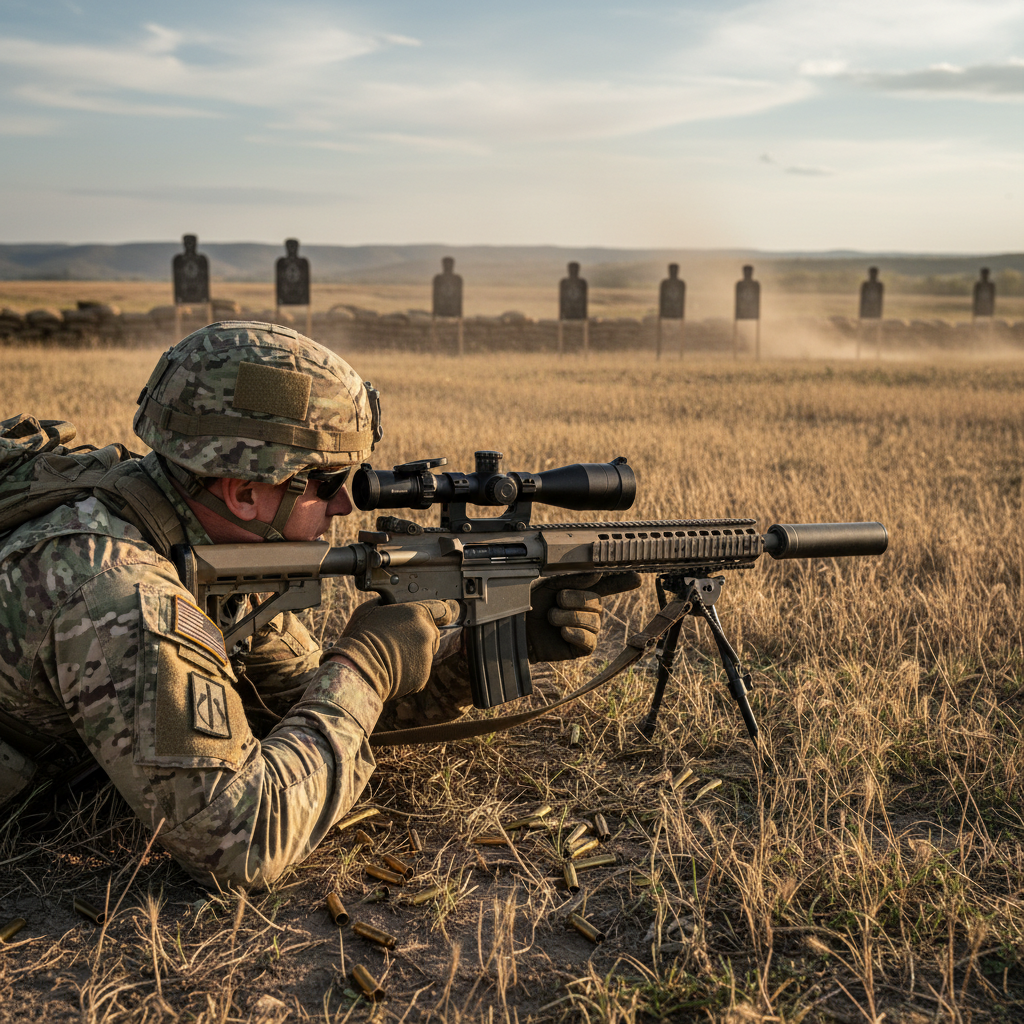
If you've spent time around precision rifles or military-style platforms, you've likely heard the terms SPR and DMR thrown around. While these acronyms might sound intimidating, understanding what they represent—and how they differ—can help you make better decisions about your rifle setup and intended use.
Let's break down these concepts in practical terms and explore where each platform shines.
What is an SPR (Special Purpose Rifle)?
The Special Purpose Rifle emerged from military needs for a versatile, intermediate-range weapon system. Think of it as the Swiss Army knife of rifles—capable of handling multiple roles without being optimized for just one specific task.
An SPR typically features:
- 18-20 inch barrel for balanced velocity and maneuverability
- Free-floating handguard for improved accuracy
- Quality optics, usually variable power scopes (1-6x or 1-8x)
- Semi-automatic operation (usually AR-15 platform)
- Effective range of 300-600 yards
- Ability to mount accessories like bipods and lights
The beauty of an SPR lies in its adaptability. It can serve as a patrol rifle, hunting rifle, competition gun, or precision platform depending on your needs. This versatility comes from careful component selection rather than extreme specialization.
Understanding DMR (Designated Marksman Rifle)
A Designated Marksman Rifle represents a different philosophy entirely. While an SPR aims for versatility, a DMR focuses on extending effective range and precision beyond standard infantry weapons but stops short of full sniper rifle territory.
Key DMR characteristics include:
- 18-24 inch barrels optimized for specific cartridges
- Match-grade components throughout
- Higher magnification optics (3-15x, 4-16x, or similar)
- Semi-automatic operation for follow-up shots
- Effective range extending to 800+ yards
- Emphasis on precision over close-quarters capability
DMRs often chamber precision cartridges like .308 Winchester, 6.5 Creedmoor, or .260 Remington. The platform sacrifices some close-range agility for superior long-range performance.
Key Differences That Matter
Barrel Length and Profile
SPRs typically use 18-20 inch barrels that balance velocity with handling characteristics. DMRs often feature longer, heavier barrels (20-24 inches) designed for maximum precision and velocity retention at distance.
Optics Philosophy
SPR optics emphasize versatility—low-power variables that work from close range to moderate distances. DMR optics prioritize magnification and precision tracking for consistent long-range performance.
Intended Role
An SPR serves as a do-everything rifle that can handle patrol work, hunting, and precision shooting adequately. A DMR specializes in providing precision fire support at extended ranges, often sacrificing versatility for specialized performance.
Weight and Portability
SPRs generally prioritize mobility and handling. DMRs accept additional weight in exchange for stability and precision components.
Which Platform Suits Your Needs?
Choose an SPR if you:
- Want one rifle for multiple purposes
- Need good close-to-moderate range performance
- Value maneuverability and handling
- Plan to hunt, compete, and shoot recreationally with the same rifle
- Prefer simpler maintenance and setup
Choose a DMR if you:
- Focus primarily on precision shooting
- Need maximum effective range
- Compete in precision rifle matches
- Have specific long-range hunting requirements
- Can dedicate a rifle to specialized use
Building Your Understanding
Neither platform is inherently better—they serve different roles. Many shooters eventually own both, using each for its intended purpose. An SPR might handle ranch work and local competitions, while a DMR excels at long-range precision matches.
The key is honest assessment of your actual needs versus perceived wants. If you shoot 90% of your rounds inside 300 yards, a specialized DMR might be overkill. Conversely, if you're serious about long-range precision, an SPR's compromises might limit your potential.
Practical Considerations
When evaluating either platform, consider your typical shooting scenarios, available ranges, and skill development goals. Both SPRs and DMRs require quality ammunition, proper training, and regular practice to reach their potential.
Remember that the shooter's skill matters more than the specific platform. A well-trained marksman with a basic SPR will outperform a novice with an expensive DMR every time.
Understanding these distinctions helps you make informed decisions about your rifle setup, training priorities, and gear investments. Whether you choose the versatility of an SPR or the specialization of a DMR, focus on developing the skills to use your chosen platform effectively.